Fiberglass or Steel? Choosing the Right Entry Door for Your Iron Range Home or Cabin.
Ask five people which entry door material is best and you’ll get five confident (and different) answers.
The truth? Fiberglass and steel are both excellent doors.
The question isn’t which one is better.
It’s which one is better for YOUR Iron Range home. A back door off a heated garage and a lake-facing cabin door with no overhang demand very different things.
Here’s how we help customers sort it out.
Steel doors: strength and value
A modern steel entry door isn’t a slab of metal. It’s a steel skin wrapped around a polyurethane foam core, which is where the insulation actually comes from. Built that way, steel doors deliver real energy performance at a pretty-accessible price point.
Where steel shines:
- Budget. Dollar for dollar, steel gives you the most door. For a rental property, a second entrance, or a whole-house door replacement where the numbers matter, that’s significant.
- Rigidity. Steel doesn’t flex. A well-hung steel door in a well-built frame stays square.
- Security perception. Steel comes looks solid, and for many home and cabin owners in northern Minnesota, that peace of mind counts for something.
Where steel asks more of you:
- Dents are permanent. A snowblower handle, a dropped tool, a kicked-open door when your arms are full of groceries — steel dents, and a dented steel door stays dented. There’s no sanding it out.
- It conducts cold. Steel moves temperature. On a very cold morning, a steel door skin can pick up condensation or frost where warm interior air meets the cold surface, especially in homes with higher indoor humidity. Quality doors are built with thermal breaks to limit this, but the material’s nature doesn’t change.
- Finish maintenance. Scratches through the finish can eventually rust, and doors that catch road salt spray or sit in a splash zone need the finish kept intact.
- Wood grain is a stretch. Steel takes paint beautifully. It does not convincingly imitate stained wood.
Best fit: garage entry doors, back and service doors, sheltered entries with a good overhang, high-volume replacements, and anyone who wants a clean painted look at the best value.
Fiberglass doors: stability and versatility
Fiberglass doors use a composite skin over the same kind of insulating foam core. Insulation values land in the same range as steel — sometimes a little better — but the material behaves differently, and that’s the real story.
Where fiberglass shines:
- Fiberglass won’t rust, rot, or swell. For a door that takes direct rain or snow with nothing above it, that’s the single biggest argument.
- It handles temperature swings. Fiberglass is dimensionally stable through freeze-thaw cycles and doesn’t conduct cold the way steel does, so condensation and frost on the door face are far less common.
- It shrugs off daily abuse. No dents. Fiberglass takes the bumps of an active entryway and looks the same in year ten.
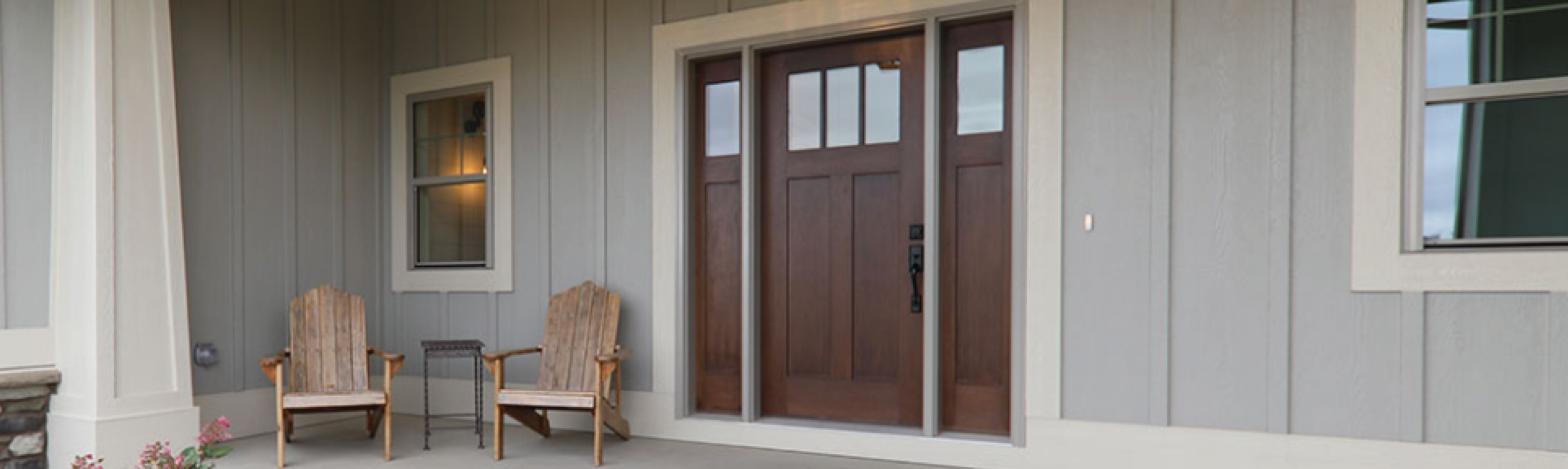
- It can look like wood. Grain-textured fiberglass takes stain convincingly. For a cabin or a rustic-inspired home where a stained wood door is part of the aesthetic, you get the look without the annual maintenance a real wood door demands.
Where fiberglass asks more of you:
- Higher upfront cost. Expect to pay more than a comparable steel door, particularly for stained finishes and decorative glass.
- Severe impact can crack it. Fiberglass won’t dent, but a hard enough blunt impact can crack the skin. Like a dent, it’s not something you buff out.
Best fit: front entries, exposed doorways with little or no overhang, cabins and seasonal properties, lake-facing doors, and anyone who wants a stained wood appearance with almost no upkeep.
The part most people skip
Here’s what visiting our Pohaki professionals in our northside-Virginia storefront usually reveals: the skin material is rarely the deciding factor in how a door performs.
Installation matters more than material. A premium door installed “out of plumb” in a frame that isn’t properly insulated and flashed will underperform a modest door installed correctly. Every single time.
Weatherstripping and the threshold do the heavy lifting. Most of the air you feel at a door isn’t coming through the door. It’s coming around it. Adjustable thresholds, quality sweeps, and compression weatherstripping are where comfort actually lives.
Glass changes the math. A door with a large decorative glass insert has different energy numbers than a solid slab, regardless of what surrounds the glass. If you want light, ask about Low-E and the insulated-glass package rather than assuming the door material will carry it.
Exposure direction is worth a thought. A door with heavy sun exposure will fade a dark finish faster. A door on the side of the house that catches the prevailing wind should be upgraded to a better weatherstripping package. These details usually matter more than the fiberglass-versus-steel debate.
The short version
Lean toward steel if: the entry is sheltered, the budget is the priority, you’re replacing several doors at once, or you want a crisp, painted finish on your entrance.
Lean fiberglass if: the door is fully exposed to the elements, it’s a cabin or seasonal property, the entryway takes a beating, or you want a stained wood look you’ll never have to refinish.
Either works, if: the entry is protected, the budget is flexible, and you like the way it looks. In that case, choose the door you want to come home to.